Orange Bud is part of the iconic cannabis varieties that have marked the history of sativa-dominant CBD flowers. This genetics, recognizable by its intense citrus aromas and beautiful orange color, has both amazed fans of legal cannabis and disrupted the European market since its appearance. Looking back in time allows us to better understand how this CBD flower became an international reference since the 1980s.
The Californian roots of Orange Bud: between heritage and innovation
Before arriving in Dutch markets, the history and origin of Orange Bud CBD flower draw their strength from the heart of California and the United States. In the 1970s, the West Coast saw the emergence of an innovative cannabis scene, driven by a need to select resilient and flavorful varieties.
Cultivation of cannabis in California is distinguished by the artisanal hybridization of local and imported plants. The search for new aromatic profiles naturally leads to the creation of skunk lines, where the aim is to combine potency with fruity flavor. The Orange Bud is born precisely from this experimental background, against the backdrop of American counterculture and the gradual rise of the “green” movement.
The arrival in the Netherlands and the boom of the 1980s
In the 1980s, the more flexible legislation in the Netherlands attracts many Californian breeders eager to preserve and optimize their selections. The meeting of American expertise and Dutch openness revolutionizes the world of cannabis. Since then, many seeds from the best varieties find refuge in this country, which quickly becomes a global center for cannabis genetics.
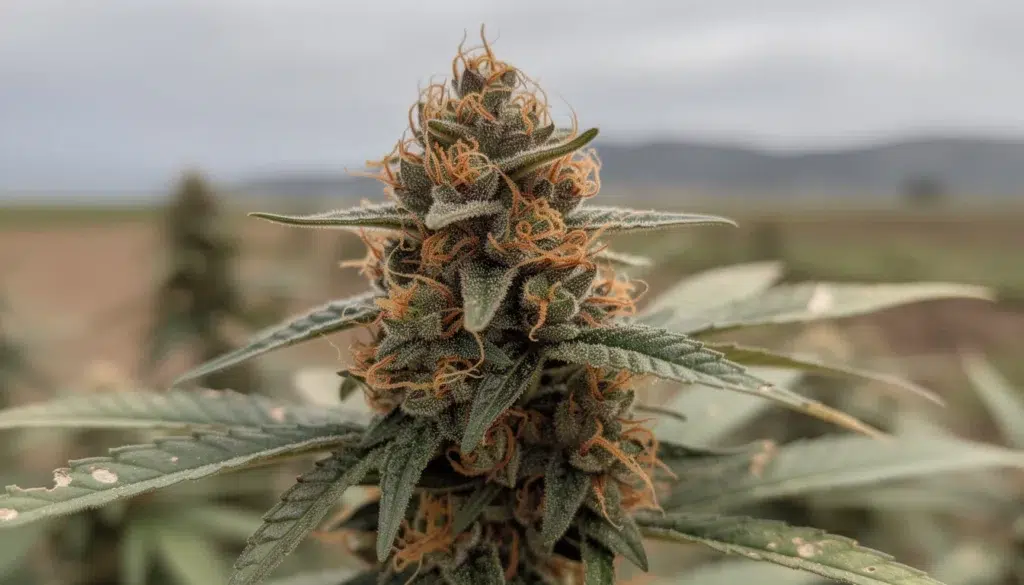
The Orange Bud is among these pioneering cannabis varieties exported to the Netherlands, where it undergoes successive crosses aimed at stabilizing its distinctive traits: marked sativa dominance, compact inflorescences, and an abundance of orange-tinted pistils. Under the influence of Dutch breeders, the citrus aroma becomes the olfactory signature of this CBD flower, while maintaining high vigor due to its skunk heritage.
The major role of skunk hybrids in the development of Orange Bud
Through the hybridizations carried out during the 1980s, skunk occupies a predominant place. Constituting one of the major genetic foundations of Orange Bud, it brings robustness, yield, and ease of cultivation. Dutch selectors then systematically seek a sativa dominance but with rapid floral development, suitable for the humidity of the local climate.
It is also during this period that emphasis will be placed on fruity and tangy aromas, a true break from the more earthy or resinous profiles that had previously predominated. The Orange Bud thus finds its unique personality by combining these two influences: Californian strength and Dutch refinement. Furthermore, other cult varieties also emerged at this time, such as Amnesia Haze, which has captivated the public with its striking visual and aromatic characteristics.
From the underground market to the rise of legal CBD
Long relegated to insider circles, the Orange Bud CBD flower is gradually making its entry into the mainstream market with the progressive legalization of cannabis with low THC content. Its success stems as much from its captivating history as from its organoleptic qualities sought after by consumers looking for authentic flavors.
With the growing openness of the CBD sector in Europe, particularly in France, several generations today are discovering the aromatic richness and gentle effects offered by this cannabis variety. The Orange Bud now embodies a bridge between tradition and modernity, keeping the memory of its American and Dutch origins intact.
Why does Orange Bud still fascinate today?
Lovers of CBD flowers often cite Orange Bud as exemplary for its extraordinary sensory profile. Dominated by citrus fragrances blended with a sweet and floral note, it instantly evokes the scents of a ripening Californian orchard.
These characteristics, combined with a slight sativa dominance, make the Orange Bud CBD flower a favored ally for those seeking a subtle experience, without excessive cerebral heaviness or sedation. Its current popularity also rests on its ability to appeal to both novices and knowledgeable connoisseurs.
Notable differences with other CBD cannabis varieties
The Orange Bud is not only appreciated for its citrus aromas but also for its dense floral structure and vibrant hues. Other popular varieties often present a more woody or spicy aromatic profile, whereas Orange Bud remains true to its fruity heritage inherited from its American and Dutch ancestors.
This distinction facilitates its quick identification among CBD flower enthusiasts, who readily recognize this rare balance between moderate natural strength and sensory explosion. Producers regularly favor this cultivar for its genetic stability and consistent quality.
- Accentuated and well-defined citrus aromas
- Sativa dominance providing mental clarity
- Compact inflorescence, rich in orange pistils
- Direct descendants of California skunk lines
- Adaptability and robustness facilitating cultivation
| Characteristic | Orange Bud | Classic Skunk | Another common CBD variety |
|---|---|---|---|
| Dominant aromas | Citrus, sweet | Musk, earthy | Spicy, floral |
| Origin | California/Netherlands | California | Europe/United States |
| Type | Sativa dominance | Balanced Sativa/Indica | Diverse |
Frequently asked questions about the history and subtleties of Orange Bud
What is special about the Orange Bud CBD flower?
The Orange Bud CBD flower stands out for its powerful citrus aromas, an abundance of orange pistils, and a perceptible sativa dominance. This cannabis variety offers a sensory experience that is both gentle and energizing, highly appreciated for its mental clarity and subtle taste.
- Fruity terpene profile
- Compact floral structure
- Stimulating experience without strong sedation
Where do the first Orange Bud varieties come from?
The first Orange Bud primarily emerged between California and the Netherlands during the 1980s, a pivotal time for the selection of innovative varieties. The expertise of American breeders then exported to Europe led to a remarkable hybridization, combining sativa dominance with the increased resistance inherited from the skunk genetic pool.
| Period | Notable Region |
|---|---|
| 1970s-1980s | California, Netherlands |
What elements distinguish Orange Bud from other CBD cannabis varieties?
The Orange Bud offers a highly intense aromatic bouquet dominated by citrus and sweet notes. Compared to other CBD flowers, it distinguishes itself through its very pronounced coloration, its assertive sativa dominance, and its Californian heritage.
- High genetic stability
- Easily identifiable vibrant hues
- Clear and invigorating effect
Why choose the Orange Bud CBD flower today?
The Orange Bud CBD flower appeals to those seeking a refined experience centered on the balance between aromatic pleasure and gentle non-psychotropic effects. Due to its stability and consistent quality, it remains an essential choice for discovering the alchemy of legal cannabis.
- Unmatched scents
- Ideal during the day for accompanying creative activities
- Living memory of cannabis tradition between two continents

Alexandre Lacarré is recognized as an innovative and influential leader in the cannabidiol (CBD) industry. Alexandre began his career in the biotechnology sector, where he gained valuable expertise in research and development. Passionate about the therapeutic potential of natural compounds, he quickly shifted his focus to the nascent CBD industry.