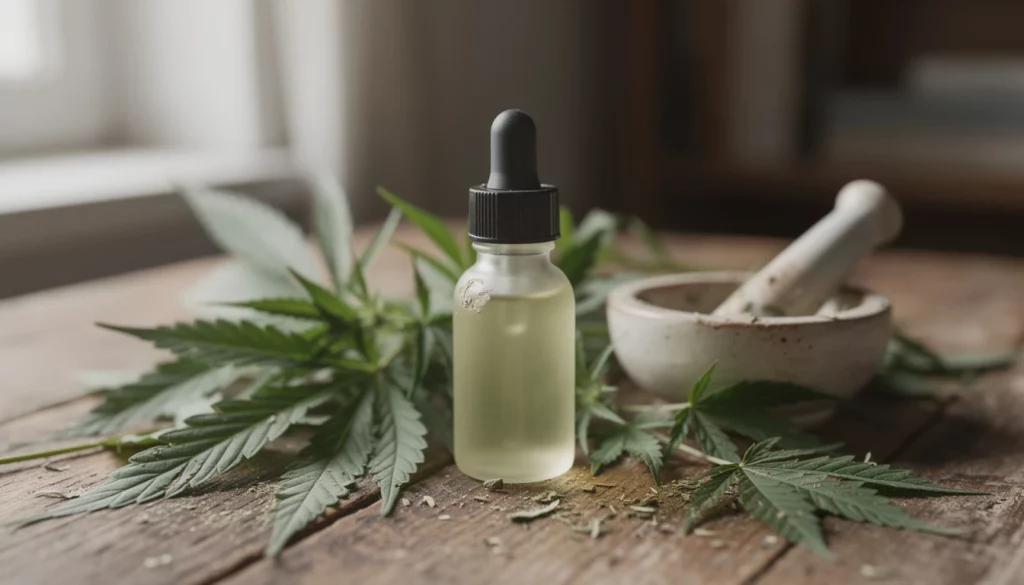
In the face of the increasing number of musculoskeletal complaints in our active lifestyles, tendinitis has become a particularly burdensome disorder. The persistent inflammation that characterizes it disrupts daily activities and limits sports or professional performance. Many are seeking today to alleviate these pains in ways other than conventional treatments. Among the alternatives, CBD attracts attention for its anti-inflammatory and analgesic properties. To what extent can it represent an effective natural solution for the relief of pain related to tendinitis?
What is tendinitis and what are its impacts?
Tendinitis results from the inflammation of a tendon, generally caused by excessive or repeated strain. It often manifests in the shoulder, elbow, wrist, knee, or Achilles tendon. The pain felt can become intense to the point of hindering movements, even completely immobilizing the affected limb for several days or weeks.
Beyond the pain, tendinitis can also generate a feeling of morning stiffness and significantly limit joint range of motion. In light of these symptoms, many are seeking natural solutions that can offer better quality of life without the systematic use of non-steroidal anti-inflammatory drugs (NSAIDs) or cortisone.
How does CBD act on tendinitis?
Lauded for its multiple applications in wellness, CBD (cannabidiol) has gained popularity in the context of muscle and joint pains. It primarily acts via the endocannabinoid system, a biological regulation involved in the management of pain, inflammation, and other essential functions.
Its reputation relies notably on its interaction with certain endocannabinoid receptors present throughout the body, particularly in the tissues where inflammation resides. This action paves the way for new perspectives for pain relief without the common side effects associated with traditional medications.
A natural anti-inflammatory effect
The action of CBD on inflammation can be explained by its ability to modulate the production of pro-inflammatory cytokines, messengers that amplify the inflammatory process. To better understand the interest of this molecule, you can consult a summary of the therapeutic effects of cannabidiol.
Users regularly report a gradual soothing after topical application or ingestion of CBD oil, reflecting the growing interest in this natural solution.
Analgesic properties promoting joint comfort
Beyond its anti-inflammatory virtues, CBD is also said to possess significant analgesic properties. It helps to decrease the perception of muscle and joint pain by disrupting the transmission of the pain signal between the affected tissue and the brain.
It is noteworthy that CBD is also studied for its relaxing effects, which helps to relax the area and facilitates recovery during tendinitis.
How to use CBD for relief from tendinitis?
Using CBD to counter tendinitis requires careful selection of the dosage form suited to each situation. Local application via a special joint cream effectively targets the painful area of the affected tendon, while ingestion of oil or capsules provides a global benefit on the balance of the endocannabinoid system.
The best practice often involves combining different methods to maximize the chances of restoring flexibility and mobility. Here are some commonly adopted approaches:
- Topical application of CBD balms or gels directly on the painful area
- Taking sublingual CBD oil for a comprehensive anti-inflammatory effect
- Combining with physical therapy sessions to enhance recovery
The choice of dosage should ideally be made in collaboration with a healthcare professional familiar with potential interactions with other treatments, as CBD is not exempt from side effects in some sensitive individuals.
What benefits to expect from CBD against tendinitis?
Many people report a notable improvement after incorporating CBD into their tendinitis management protocol. Its natural anti-inflammatory power generally combines with a progressive reduction of general discomfort.
A clear reduction in discomfort during movement is often observed, which facilitates the return to an active lifestyle. CBD also seems to capitalize on its relaxing properties to help combat muscle tension that frequently accompanies tendon irritation.
Comparison with traditional treatments
Although NSAIDs and infiltrations are effective, they sometimes have limitations: rebound effects, tissue weakening, or digestive disorders when used for long periods. In contrast, CBD is among the alternative natural solutions that are less aggressive for the body in the medium term.
Unlike some medications, it does not present a proven risk of addiction or dependence, enhancing its appeal for the prolonged treatment of chronic or recurrent muscle and joint pain.
Comparative table of solutions for tendinitis
To quickly visualize the notable differences between the main treatments for tendinitis – natural or traditional – here is a comparison table:
| Method | Action mechanism | Benefits | Disadvantages |
|---|---|---|---|
| CBD | Action on endocannabinoid receptors, modulation of inflammation | Natural solution, rare side effects, non-addictive | Variable effect depending on individuals, possible interactions |
| NSAIDs | Blocking COX-1/COX-2 enzymes, rapid reduction of inflammation | Proven efficacy on acute pain | Digestive disorders, ulcers, limited use over time |
| Corticosteroids | Strong modulation of the immune response | Rapid relief in severe cases | Dependence, risk of recurrence, tissue weakening |
Frequently asked questions about CBD and tendinitis
Does CBD completely replace medications for tendinitis?
- Enhancement of daily comfort thanks to its analgesic effect
- Reduction of dependency on synthetic analgesics
- Interest in combination with rest and physiotherapy
Are there risks or side effects of using CBD for joint pain?
- Adhere to the recommended dosage
- Inform your healthcare practitioner of any regular use
Which form of CBD should I prioritize to better target tendinitis?
- Balm or roll-on for intensive local application
- Oil to influence overall well-being and complementary
How long before feeling an effect on tendinitis?
| Form of CBD | Estimated action time |
|---|---|
| Topical application | 15 to 60 minutes |
| Sublingual oil | 30 minutes to 2 hours |
| Oral capsule | 1 to 3 hours |

Alexandre Lacarré is recognized as an innovative and influential leader in the cannabidiol (CBD) industry. Alexandre began his career in the biotechnology sector, where he gained valuable expertise in research and development. Passionate about the therapeutic potential of natural compounds, he quickly shifted his focus to the nascent CBD industry.